UX Design | UI Design | Prototyping
Problem Framing
Enterprise Platform Design
Cross Functional Collaboration
Visual Design
Created for
Zenda LLC
Timeline
4 Months
Collaborated with
Product Owners, Developers, Leadership
Overview
Zenda is a B2B enterprise platform that helps organizations understand how work actually gets done inside complex operations, not just how it is documented.
The platform breaks work down into events, activities, and resources (people, tools, data, policies), making it possible to compare what a process is supposed to look like with how it is really executed on the ground.
In this project, I designed a signal-based system that helps process owners quickly spot hidden cost issues and misalignments, turning complex operational data into clear, trustworthy signals while keeping decision-making firmly in human hands.
Problem Statement
Process owners and operational leaders were responsible for managing complex, evolving processes, but lacked timely and reliable ways to understand how those processes were behaving day to day.
Challenge 1
Limited visibility into where attention was most needed within large, interconnected processes
Challenge 2
Difficulty keeping documented process definitions aligned with real-world execution as teams, tools, and constraints changed over time
Challenge 3
Heavy dependence on manual reviews, static reports, and periodic audits to uncover issues
“How might we design a scalable signalling system that helps process owners focus on what truly needs attention—without overwhelming them while preserving human judgment and building long-term trust in algorithmic insights? ”
Who are the users?
The primary users of this system were process owners and operational leaders within large enterprise organizations.
They were responsible for:
Defining how critical business processes should run
Monitoring performance, cost, and compliance at scale
Intervening when inefficiencies, risks, or deviations emerged
The Solution
The solution was designed as a signal-based system that sits between raw operational data and human decision-making. Instead of flooding users with alerts or recommendations, the system applies logic to surface only high-confidence, high-impact signals.
The system is composed of two complementary capabilities:
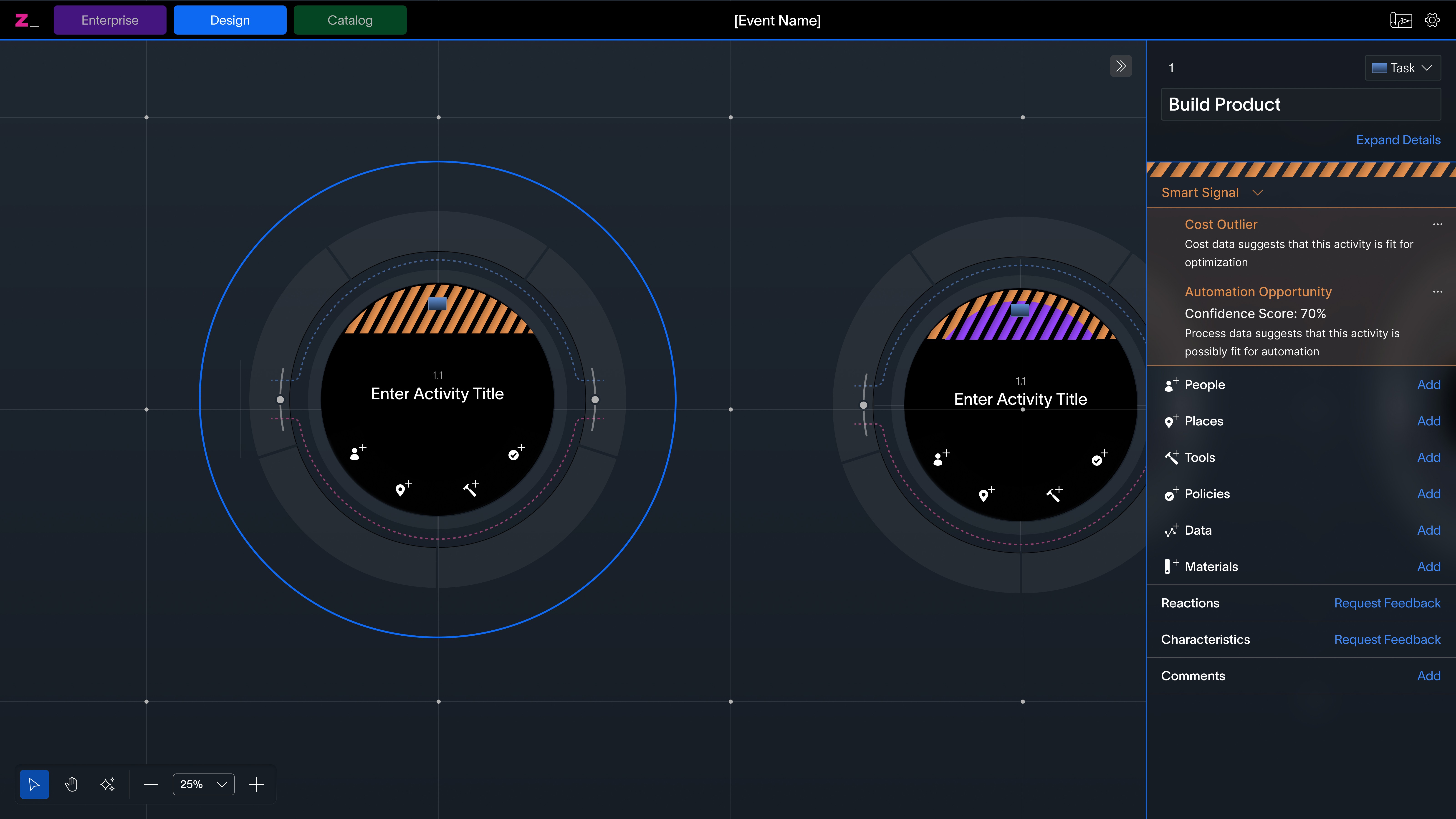
Cost Signals:
Backend algorithms analyze process execution data to identify:
Cost outliers within activities or process variants
Patterns that indicate disproportionate spend relative to peers or historical baselines
Signals are generated only when predefined confidence thresholds and impact criteria are met, helping users focus attention where it is most valuable.
Rather than prescribing actions, the system provides contextual information that allows process owners to investigate root causes and decide next steps
Operational Drift Detection:
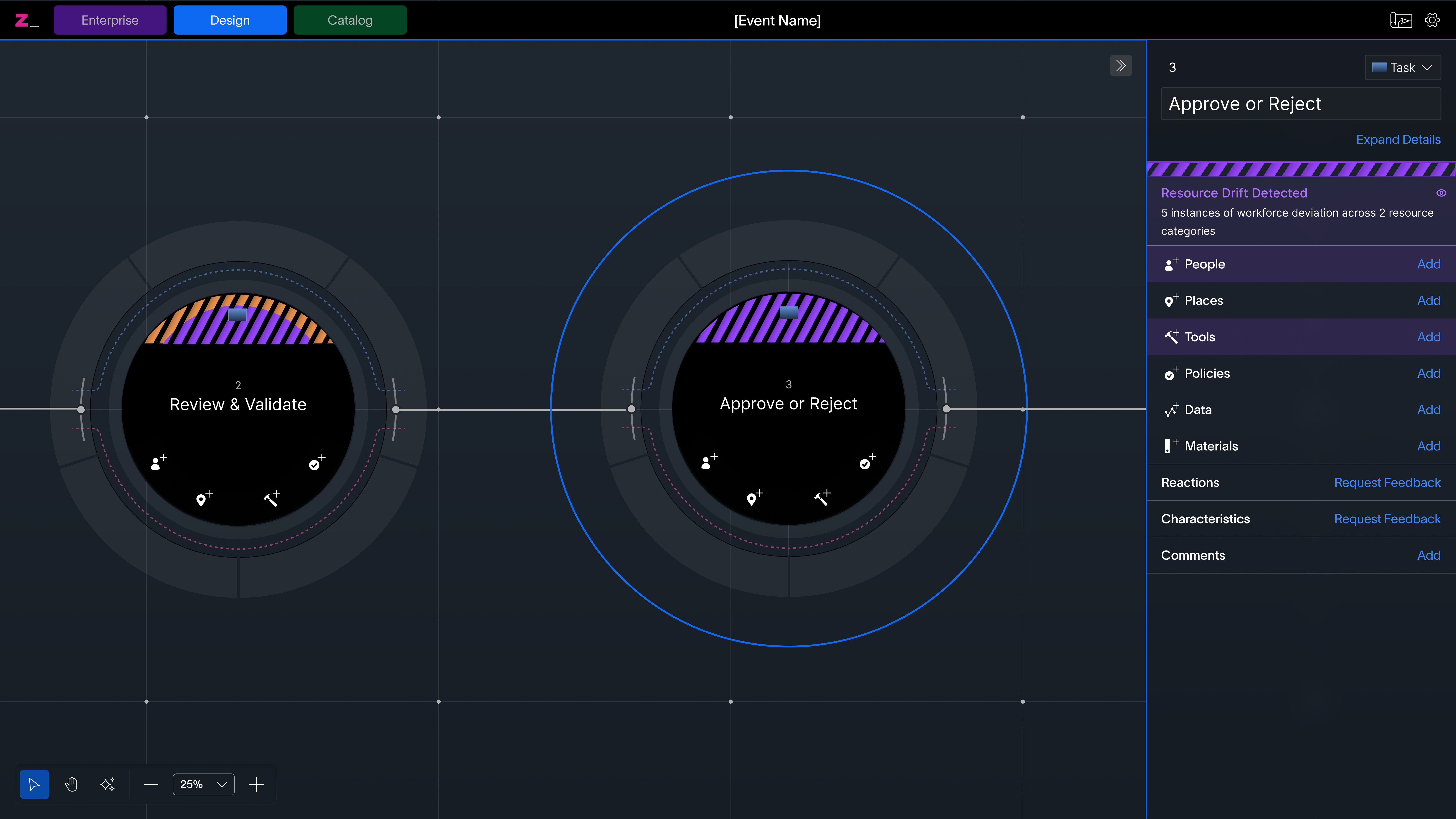
The system continuously compares:
Resources defined by process owners (e.g., people, tools, materials, data, policies)
Resources actually observed through workforce execution data
When mismatches are detected, the system signals a drift, indicating that the documented process no longer reflects reality. The process owner can then resolve the drift by adding or removing resources, keeping process definitions accurate over time.
Outcome & Impact
Improved visibility into cost inefficiencies and process misalignment
Reduced reliance on manual audits
Enabled proactive, ongoing process governance