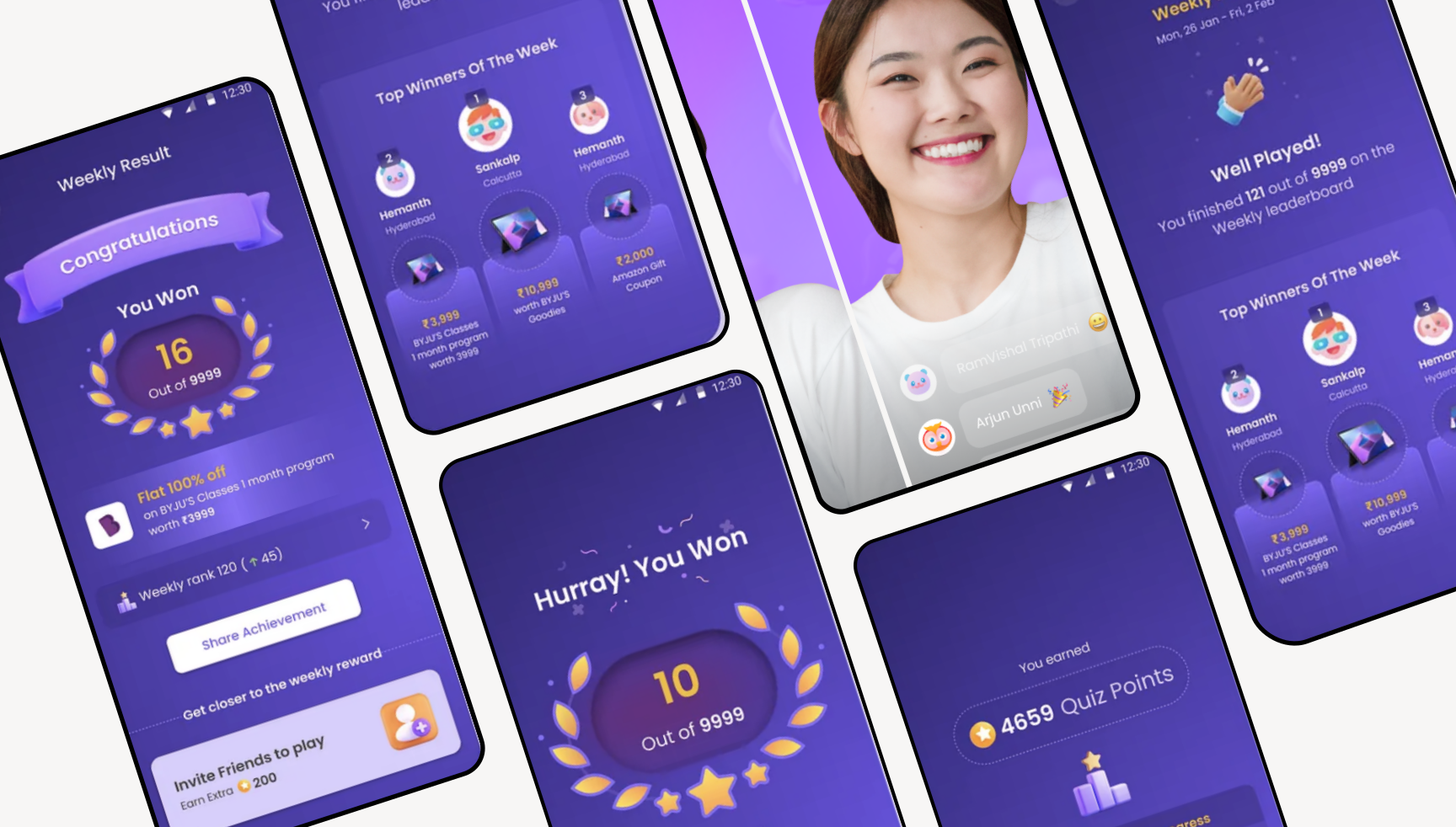
Byju's Live Quiz hero with multiple phone mockups of the live quiz experience

Byju’s (Edtech)

Crafting ‘Live Quiz’ from scratch — a real-time, competitive trivia layer that turned passive study into appointment viewing

We acquired over 2,000 new users organically in the first two months and saw Live Quiz become one of the product’s highest-retained engagement surfaces — proof that the right mix of stakes, social proof, and pacing could outperform conventional assessment flows.

ROLE

Associate Product Designer

TIMELINE

5 months

IMPACT

2,000+ new users & strong D0 / retention on the live path

Overview

Byju’s is one of India’s largest K–12 learning platforms. Students already spent time on self-paced video and practice, but organic virality and repeat visits were harder to sustain outside exam seasons. Leadership asked for a net-new engagement mode that could feel native to Gen-Z media habits — fast, social, and competitive — without compromising trust in an education brand.

Live Quiz was that bet: scheduled real-time trivia sessions where learners competed on curriculum-aligned questions, saw leaderboards update live, and could invite friends. My role spanned discovery research, competitive teardowns, interaction design for every phase of a session, and close collaboration with PM and engineering on rollout and instrumentation.

Problem Statement

Traditional learn and assessment flows on mobile skewed solitary. Completion was decent for “Learn” formats, but assessment moments felt like chores — high stakes for the user without the short-loop rewards that mobile games and live trivia apps had normalized. We needed a pattern that preserved academic rigor while borrowing the tension, clarity, and shareability of live trivia.

In Depth Analysis

We audited where learners dropped off inside the app and compared day-zero completion for core “Learn” paths versus “Assessment” modules. Baseline analytics showed assessment-style surfaces underperforming on first-day completion even when the underlying concepts were identical — suggesting the issue was motivation and framing, not difficulty alone.

Feature category Feature D0 completion rate
Learn Guided video capsule + inline checkpoints 72%
Learn Adaptive practice worksheet (same topic) 68%
Assessment End-of-chapter timed test 43%
Assessment Diagnostic quiz (ungraded) 51%
Assessment Live Quiz pilot (timed, social leaderboard) 81%

The pilot slot for Live Quiz — same cohort, same week — outperformed static tests on day-zero completion, which gave us permission to invest in productionizing the experience and folding it into onboarding touchpoints.

Key Research Insights

I ran a mix of moderated sessions with active users, diary prompts after school hours, and co-design workshops with tutors who ran group batches. Four themes consistently showed up:

  1. Appointment time beats “open-ended study.” Students were far more likely to show up when a session had a fixed start time and a visible countdown — it turned studying into an event they could plan around.
  2. Leaderboards work when the math feels fair. Transparency about how ranks were computed (and when ties were broken) mattered more than flashy animation. Ambiguity read as “rigged” and killed trust.
  3. Social proof needs names, not just avatars. Seeing friends or classmates in the lobby increased join rates; anonymous blobs did not. We prioritized lightweight identity (first name + school cohort where allowed) over heavy profile creation.
  4. Teachers wanted a safety valve. Tutors asked for the ability to spotlight “explain this” moments after a tricky question so the format stayed pedagogically defensible in parent conversations.

Competitive Analysis

We studied global live-trivia leaders and Indian skill-based trivia apps to extract interaction patterns that could port to a curriculum context — without importing casual-gaming visuals wholesale.

01
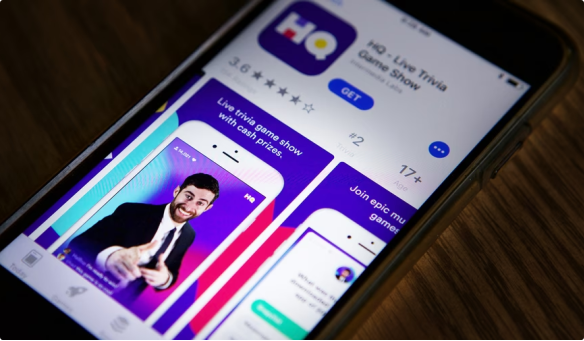
HQ Trivia product reference screens

HQ Trivia

Popularity

  • Pioneered appointment-style live shows; strong habit formation around fixed start times.
  • Host personality + chat created a “broadcast” energy that made passive viewing acceptable before answering.

Referrals

  • Extra lives and share-to-unlock mechanics drove organic invites at scale.

Game format

  • Binary 10-second windows; single strike elimination raised stakes but also frustrated learners used to second chances.

Game rules

  • Strict anti-cheating posture; limited retakes — instructive for trust, risky for an education use case where practice matters.
02
Loco Quiz product reference screens

Loco

Popularity

  • Regionalized hosts and Hindi / Hinglish commentary lowered the barrier for mass-market mobile users in India.

Game format

  • Multiple mini-rounds and partial prizes kept engagement even when users missed early questions.
  • More forgiving pacing — closer to what we needed for scaffolding difficult STEM items.

Metrics

Adoption rate

After launch, Live Quiz stabilized as one of the top three entry points from the home feed for active subscribers in target grades. Week-over-week participation grew as we iterated on lobby copy, push timing, and difficulty calibration. Tutor-led batches could opt in cohort-wide quizzes, which created recurring spikes tied to class schedules rather than one-off campaigns.

Install rate

Organic invites (“Join my quiz”) moved the needle on new installs among friend groups in the same school year. We measured incremental installs attributed to share links and found a meaningful lift compared to generic app invites, validating that the live wrapper was doing perceptual work the static referral flow could not.

Principles

While researching trivia and classroom assessment patterns, I pressure-tested three loops that needed to stay in balance for the experience to scale. Each maps to a product principle we used in crit and handoff.

Core loop — learn, answer, see rank move

The tightest feedback cycle had to stay under ten seconds: read stem, commit, instant correctness signal, leaderboard delta. If any step felt mushy, the session read as a delayed test instead of a show.

Meta loop — progress that outlasts one night

Badges for streaks, topic mastery, and “comeback” performances gave students a reason to return next week even if they bombed one quiz. Meta rewards had to connect to curriculum tags so parents saw purpose, not just cosmetics.

Viral loop — fair invites

Invites only worked if the join flow was one tap and the lobby showed why showing up now mattered. We avoided predatory spam patterns; instead we highlighted “your class is 12 people away from a group bonus.”

Gamification Framework

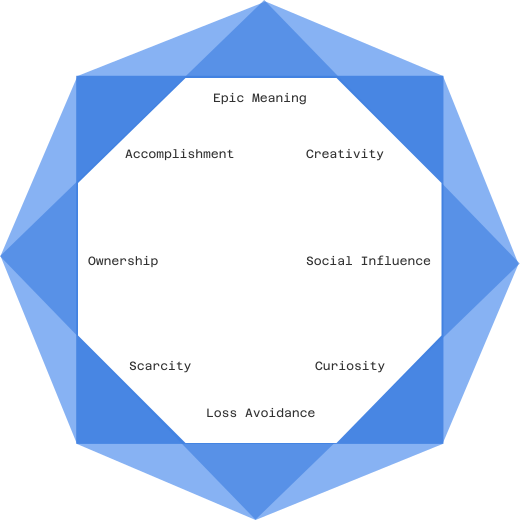
To align stakeholders around why each mechanic existed — not just which iconography to Ship — I mapped Live Quiz to an Octalysis-style view: left-brain drives (ownership, accomplishment) versus right-brain drives (unpredictability, social influence). It helped legal and curriculum reviewers see that randomness lived in presentation order, not in whether answers were correct.

Octalysis framework diagram mapped to Live Quiz mechanics

Octalysis framing used in workshops; final visual distilled into stakeholder-friendly language for non-design teams.

Final Design

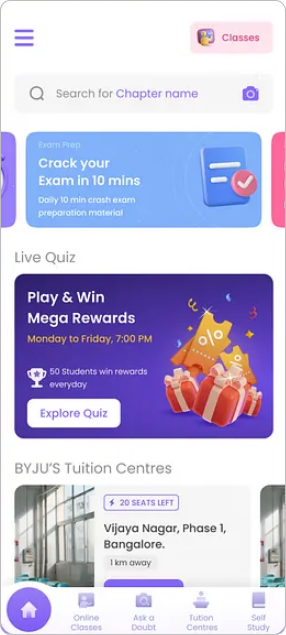
Byju's app home screen showing the Live Quiz discovery banner and weekly schedule

Pre-Quiz Discovery Phase

Pre quiz is referred to as the time when the user discovers live quiz from the Homepage and explores more about it or play the game depending on the time of the day.

For this a banner was introduced within the home page. I aimed at making the banner stand out, so that it draws the user attention.

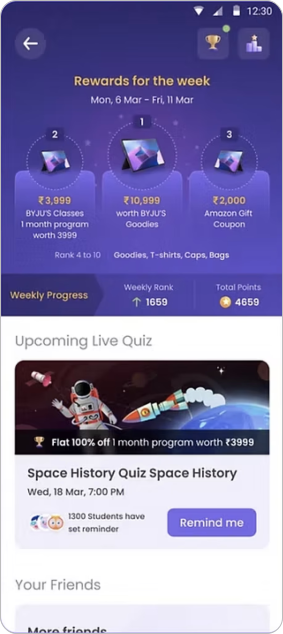
We also utilised Scarcity and impatience, the core drive of creating a sense of urgency and excitement. It is about making users feel like they need to act now or miss out

Introduced daily and weekly rewards program (Extrinsic Motivation), which will lure students to play live quiz everyday.

Added elements like intriguing illustrations, social proofing to add validation for the students.

Live quiz lobby with participant presence and countdown
Exploratory revision carousel within the pre-quiz flow

Pre-Quiz Exploratory Phase

Pre quiz exploratory phase covers when the user has discovered live quiz and wants to learn more — lobby, schedule, and light revision before joining.

The lobby blended social presence with last-minute context: a short carousel of hints, a realtime participant strip, and clear start time so scarcity still read as fair.

Students could skim explanations in a study mode; switching it off returned the lean, competitive layout. Tutor shoutouts reinforced trust when batches joined together.

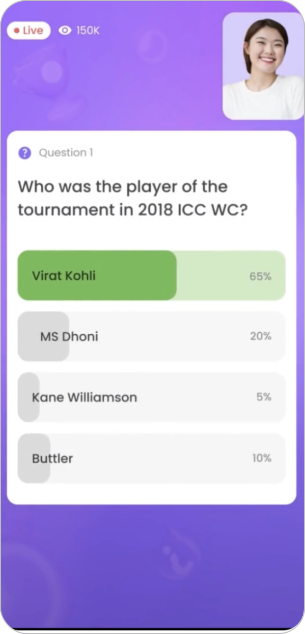
During-quiz screen with question, answers, and timer

During Quiz

Questions use bold hierarchy, high-contrast answer chips, and an unmistakable timer so the core loop stays under ten seconds: read, commit, see if you were right, watch rank move.

After each reveal we surfaced a short rationale — enough to learn without breaking pacing. Leaderboard motion stayed subtle so reduced-motion settings could flatten cleanly.

Post Quiz: Exploring Phase

Once the game ends, the experience that comes after is referred to as post quiz.

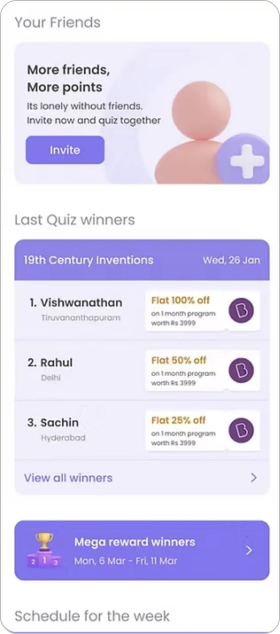
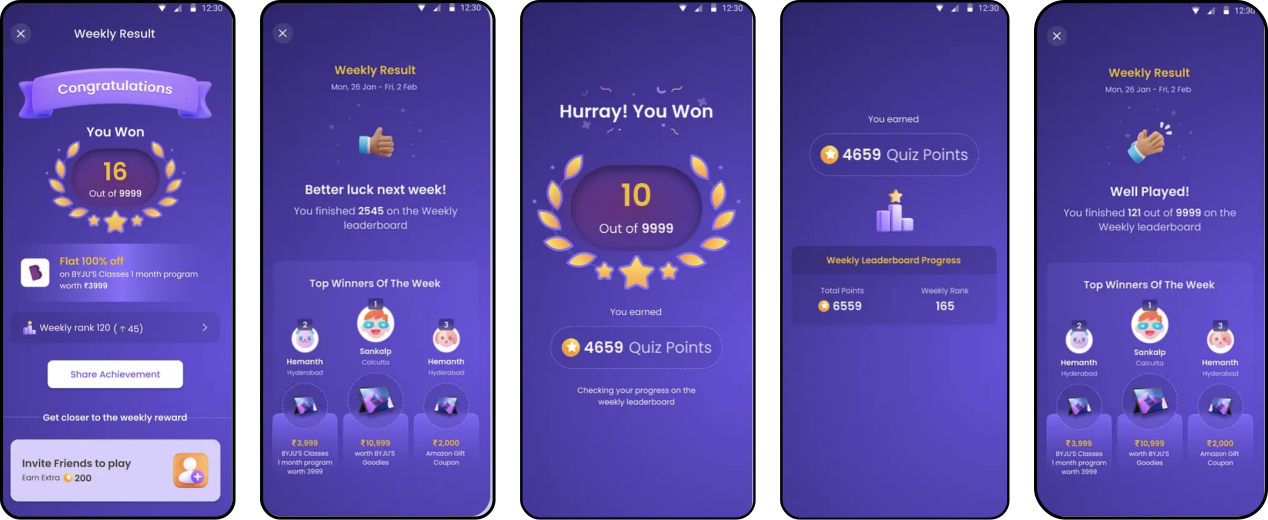
We introduced an after-game experience which showed the progress made throughout the game, and to provide a bigger picture, we introduced Global and Friend Leaderboard.

Five post-quiz mobile screens showing weekly results, winnings, quiz points, leaderboard progress, and top winners

Impact

There are around 2,000 users currently playing on the Byju’s app (Data as of December 2022).

  • Approximately 3% lead to sales conversion through this feature (which is highest through any feature on the app).
  • Better feature retention compared to overall BTLA:
Overall Live Quiz
Day 1 20% 31%
Day 2 12% 23%
Day 3 9% 21%
Week 1 18.5% 34%